

Image credit: Pexels
“Learn to code!” Just a few years ago, incoming college freshmen would have heard this advice from every corner. It was earnest and well-meaning—a suggestion intended to guarantee a secure and remunerative job after graduation.
In 2025 that advice doesn’t look as smart. AI coding tools are replacing junior programmers in more and more companies. Other fields like sales and marketing, design, and human resources are also seeing a reduction in entry level hiring. Across the board, there is tremendous uncertainty about the future of work, especially for those who will enter the job market in the next few years.
Maybe college just isn’t worth it anymore. That’s what many young people are beginning to wonder. And with tuition continuing to rise—this year going up faster than inflation for the first time since 2020—the investment in time and money for a four-year degree is increasingly hard to justify.
So what should parents do? Many people have succeeded in work and life without a formal education. Steve Jobs, Bill Gates and Mark Zuckerberg all dropped out of college; Richard Branson never even applied. But college has long represented a gateway to a better life. Along with owning a home, getting a college degree is part of the American dream.
Now business and the academy are paying attention. Programs are being rolled out across the country that directly address this growing skepticism of the relevance of higher education. Here are four of them:
The Meritocracy Fellowship
Alex Karp, CEO of data analytics company Palantir, believes that AI, and specifically the use of Large Language Models, makes general knowledge into a commodity. Far more valuable, according to Karp, is specific domain expertise, the kind of knowledge and wisdom more easily gained in a work setting than in college.
That’s what Palantir wants to deliver with its Meritocracy Fellowship. “Skip the debt. Skip the indoctrination. Get the Palantir degree,” is the program’s tagline. Now in its second year, the Fellowship welcomes a cohort of two dozen recent high school graduates from a pool of more than 500 applicants. After several months of seminars in history, religion, science and philosophy, fellows join Palantir’s engineering and development teams. This is the hands-on exposure that Karp espouses. When the program ends in December several fellows will be offered full-time employment at Palantir, bypassing college altogether.

Image credit: Rathfelder, CC BY-SA 4.0, via Wikimedia Commons
Cornerstone Integrated Liberal Arts
Purdue University created Cornerstone Integrated Liberal Arts in reaction to dropping enrollment in liberal arts classes. Launched in 2017 and active across several Indiana campuses, Cornerstone aims to integrate the humanities into a STEM-focused course of study.
“We seek to develop engaged Purdue graduates who can write clearly, speak with confidence, and engage with differing viewpoints,” states the Cornerstone website. According to the program, these are the key skills for any worker in a 21st century global economy, and Purdue University feels that it now has the right structure to help its students acquire them.
Seven years after its launch, Cornerstone Integrated Liberal Arts has been cited by the Boyer Commission: A 2030 Blueprint for Undergraduate Education at U.S. Research Universities as a national model for reinvigorating the humanities, the program is integrated into the first year curriculum at Purdue’s Mitch Daniels School of Business, and its success—more than 5,000 Purdue University students take Cornerstone classes every year—has prompted the university to hire 100 new humanities faculty, a dramatic reversal for the formerly struggling School of Liberal Arts.
In a recent PBS report on Cornerstone Integrated Liberal Arts, the program’s director, Professor of History, Melinda Zook, reflected on the consequence of integrating the humanities into other areas of study: “I often look at my students and I think, your life is going to be filled with crucial choices. Will you make the right ones? If you don’t know anything about the world or yourself or others, how can you?”
The Brandeis Plan to Reinvent the Liberal Arts
In the fall of 2026, Brandeis University will open its new Center for Careers and Applied Liberal Arts, a place where all students can receive career guidance and mentorship throughout their four years at the university. At the Center students will be matched with an academic and career advisor, required to complete an internship or apprenticeship, and encouraged to take advantage of AI powered tools like ETS’s Futurenav Compass to identify unusual connections between academics and career possibilities.
And the Center is just one part of a larger blueprint for learning at Brandeis that includes a new core curriculum highlighting critical thinking, ethical reasoning, communication and data fluency, a second transcript for graduates that captures career-focused skills, and a reimagined academic model that combines theory with practical applications.
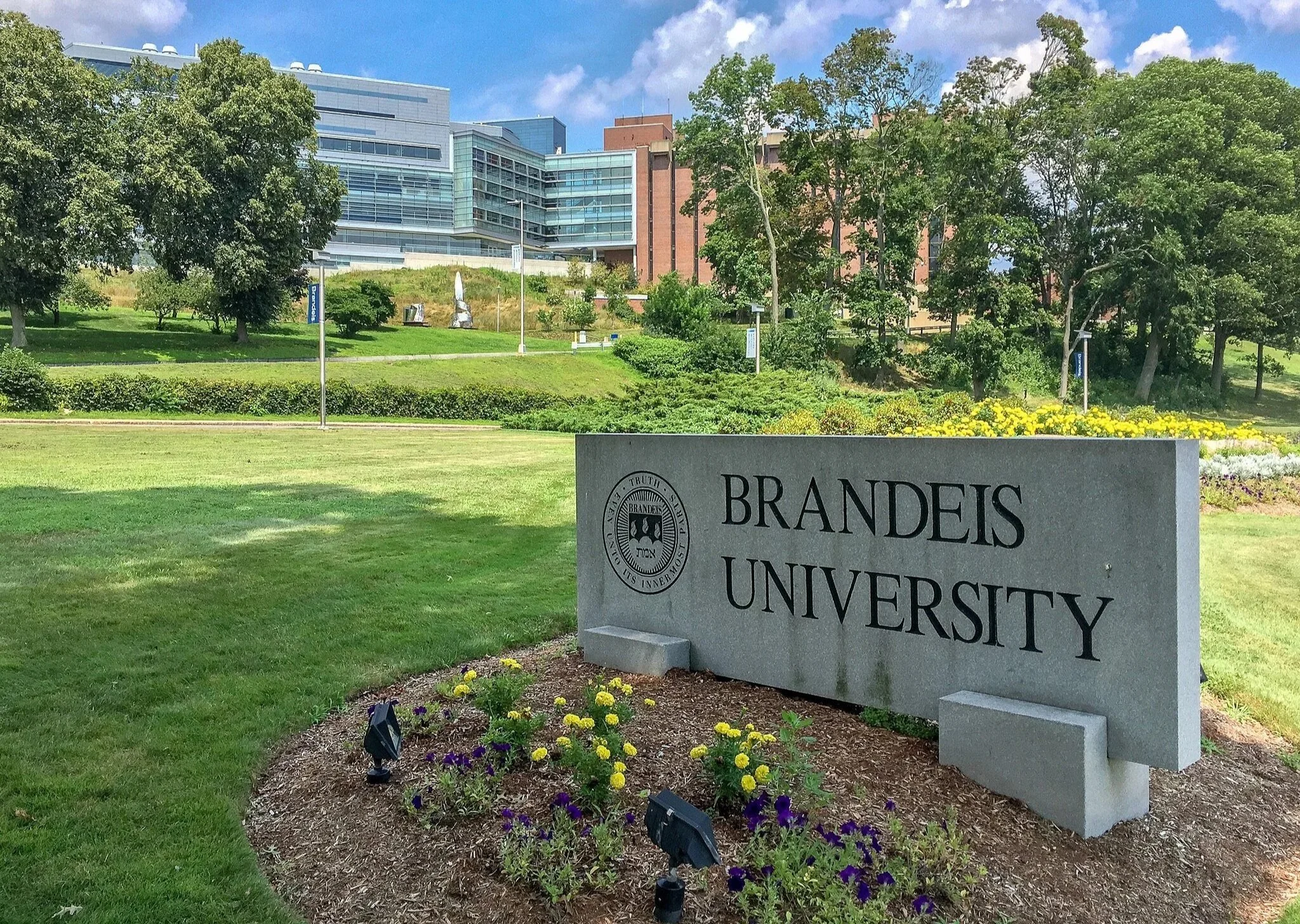
Image credit: Kenneth C. Zirkel, CC BY-SA 4.0, via Wikimedia Commons
School of Arts, Entertainment, and Creative Technologies
Georgia Institute of Technology (“Georgia Tech”) has long been a resource for the State of Georgia’s dominance in creative industries, especially film production. Their new School of Arts, Entertainment, and Creative Technologies—along with a Bachelor of Science degree with the same name—is being created to prepare students for the interdisciplinary skills needed to stay on top of a rapidly changing entertainment and technology landscape.
The program, which will welcome its first students in the fall of 2026, is specifically targeting young people who love the arts and technology and don’t want to exclude either discipline when they get to college. With entertainment and creative fields undergoing huge change from artificial intelligence, the 21st century workforce will need to be equally adept in tech and artistic creation.
Image credit: Pexels
What is college for? Is it to prepare each new generation to be responsible citizens of a democratic country? Is it to give students the intellectual tools to think clearly and critically, and make good decisions? Open minds to new ideas? Learn how to learn? Provide employable skills?
All of it, no doubt. But more than anything else, what students and parents need today is relevance in a confusing and changing world. If these four programs are a model for what’s possible, business and higher education can meet that challenge.
—
Published here on Forbes.com
November 21, 2025
